
 Kia K900: Engine overheat
If your temperature gauge indicates overheating, you experience a loss of power, or hear loud pinging or knocking, the engine is probably too hot. If this happens, you should:
1.Pull off the road and stop as soon as it is safe to do so.
2.Place the shift lever in P and set the parking brake. If the air conditioning is on, turn it off.
3.If engine coolant is running out under the car or steam is coming out from the hood, stop the engine.
Do not open the hood until the coolant has stopped running or the steaming has stopped. If there is no visible loss of engine coolant and no steam, leave the engine running and check to be sure the engine cooling fan is operating. If the fan is not running, turn the engine off.
4.Check to see if the water pump drive belt is missing. If it is not missing, check to see that it is tight. If the drive belt seems to be satisfactory, check for coolant leaking from the radiator, hoses or under the car. (If the air conditioning had been in use, it is normal for cold water to be draining from it when you stop.)
WARNING
While the engine is running, keep hair, hands and clothing away from moving parts such as the fan and drive belts to prevent injury.
5.If the water pump drive belt is broken or engine coolant is leaking out, stop the engine immediately and call the nearest authorized K900 Kia dealer for assistance.
WARNING
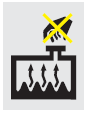
Do not remove the radiator cap when the engine is hot. This may result in coolant being blown out of the opening and cause serious burns.
6.If you cannot find the cause of the overheating, wait until the engine temperature has returned to normal.
Then, if coolant has been lost, carefully add coolant to the reservoir to bring the fluid level in the reservoir up to the halfway mark.
7.Proceed with caution, keeping alert for further signs of overheating. If overheating happens again, call an authorized K900 Kia dealer for assistance.
CAUTION
- Serious loss of coolant indicates there is a leak in the cooling system and this should be checked as soon as possible by an authorized K900 Kia dealer.
- When the engine overheats from low engine coolant, suddenly adding engine coolant may cause cracks in the engine. To prevent damage, add engine coolant slowly in small quantities.
 Push-starting
Vehicles equipped with automatic transmission cannot be push-started.
Follow the directions in this section for jump-starting.
WARNING
Never tow a vehicle to start it because the sudden surge forwa ...
 Tire pressure monitoring system (TPMS)
(1) Low Tire Pressure Telltale/TPMS Malfunction Indicator
(2) Low Tire Pressure Position Telltale (shown on the LCD display)
Each tire, including the spare (if provided), should be checked monthly ...
See also:
Sunroof open warning
If the driver turns off the engine when the sunroof is not fully closed, the
warning chime will sound for a few seconds and a warning message will appear on
the LCD display.
Close the sunroof s ...
Online factory authorized manuals
Service manual:
This manual covers maintenance and recommended procedures for repair to engine
and chassis components. It is written for the Journeyman mechanic, but is simple
enough for most mec ...
Owner maintenance
The following lists are vehicle checks and inspections that should be performed
by the owner or an authorized K900 Kia dealer at the frequencies indicated to help
ensure safe, dependable operation ...
Categories
